• Facebook
  • LinkedIn
Security Services across the GTA: 1 (905) 415-1112
Wincon Security
  • Services
    • Security Guards
    • Condo Concierge
    • Loss Prevention
    • Mobile Patrol
    • Virtual Monitoring
    • Security Integration
    • Emergency Planning
  • Markets
    • Colleges & Universities
    • Commercial
    • Condominiums
    • Construction Sites
    • Industrial
    • Retail
  • About
    • About Us
    • Contact
    • Testimonials
    • FAQ
    • Locations
  • Wincon News
  • GET A QUOTE
  • Apply Now
    • Winner’s Circle
  • Menu Menu

Posts

Security

Robot security guards & integrated security services

It wasn’t long ago that the idea of a robot patrolling facilities such as factories or hospitals—providing help when needed, or protecting physical assets to ensure they remain protected and secure—was the stuff of pure science fiction.

Now, it’s a relatively accessible reality. Some would even say we’re nearing a point where robot security is becoming a mainstream, commoditized service. So, how did we reach this tipping point? Better yet, will we see a day when robots completely replace human guards?

Companies such as Hexagon, Gamma2 Robotics, and Knightscope are making huge strides in the development of robot security software and robots that can autonomously patrol a facility at any time, the extent of their labour limited only by the charge in their batteries. Organizations have been receptive to the new technology due to a number of real-world factors ranging from the potential risk of injury to human guards, to the basic monotony of patrolling a facility dozens of times during the course of a shift.

Robots also provide cost stability and certainty. Their wages never increase because they don’t require a salary. They will never ask for overtime pay, nor do they require severance payments upon termination (or in this case, decommissioning). If you no longer require the robot’s services, unplug it, sell it or send it back to the company from which you’ve leased it.

With that in mind, robots may seem to be the ideal solution for any organization looking to secure their facilities. Or maybe not.

Consult with us to determine if integrating robot security into your strategy is right for you.

Robotic limitations abound

While robotic adoption and deployment will become easier, and the rollout will continue across the integrated security solutions industry as costs continue to fall, these roaming, futuristic devices will likely never replace human guards. Instead, we should consider them a utilitarian complement to the work of trained security personnel. Why?

First, humans provide operational continuity. They see and hear things that even the most sophisticated software and cameras can’t. A human’s ability to recognize potential danger or abnormal situations is still well ahead of the capabilities of current onboard robotic software. Robots can detect variations such as temperature differences or when a door, that should otherwise be locked, isn’t. But they still need to be programmed to detect such abnormalities. They also can’t apprehend intruders (yet!) or assist in the event of a situation such as a medical emergency. At best, they can only serve as an extra set of eyes and ears for someone watching a space through the robot’s onboard cameras, then relay a call for help to first responders.

They’re also not foolproof.

Last year a Knightscope robot patrolling the Stanford Shopping Center outside of San Jose, Ca., caused a stir when it ran over and bruised a toddler’s foot. The boy was OK, but the incident underscored the challenges that even the most complex algorithm and sensor systems can face when attempting to predict and react to unusual or erratic variables, such as the movements of a young child.

There’s also the issue of human and cultural acceptance, particularly with employees. Not everyone will love the sight of a robot roaming around their workplace, potentially monitoring their every move in cases where a facility is operational day and night.

That could all change in the future with advances in artificial intelligence and machine learning. Robotics capabilities will also continue to make exponential leaps forward with the specific goal of avoiding incidents such as having a 300-pound robot run over a toddler’s toes.

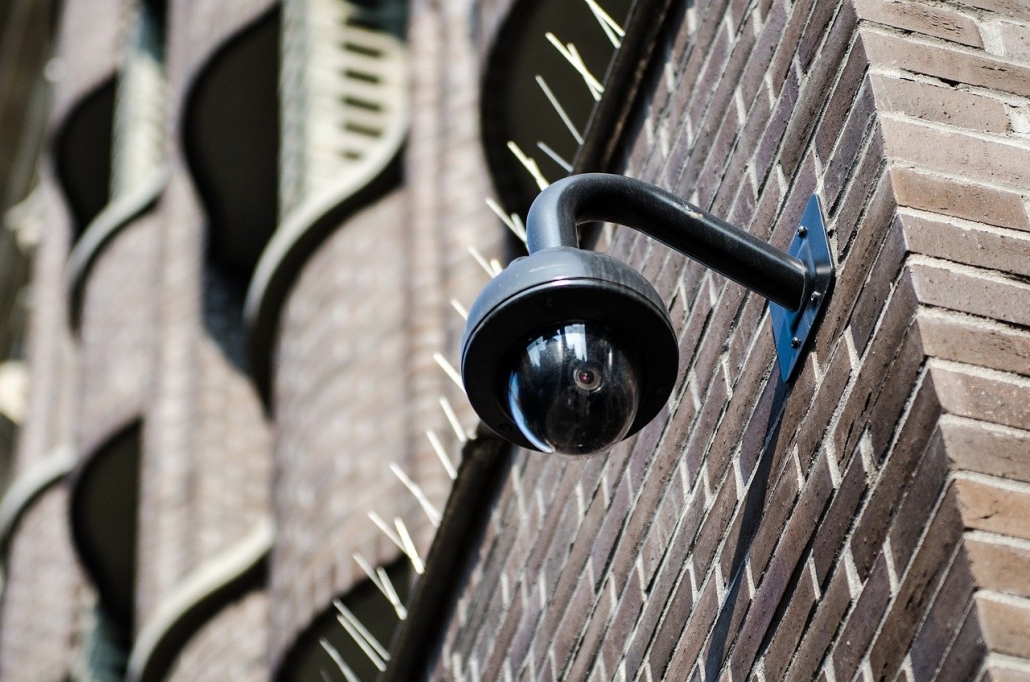
camera for retail loss prevention services
If yours is a high-tech industrial facility that requires high levels of security, or contains chemicals or other hazardous materials, then a robot might make sense.

A fit for some businesses—but not all

Still, the technology holds the promise of greater flexibility and affordability for organizations of all sizes, particularly small and medium-sized businesses.

If you’re not sure whether robot security guards might be the right fit for your organization, you’re not alone. In the months and years ahead, many business leaders will be asking the same question and calculating the potential cost savings of relying on R2-D2-like patrol guards over their human counterparts.

My recommendation is to analyze your security needs as an organization. Do the costs of adopting high-tech tools such as a robot outweigh the benefits of tapping the services of a traditional security firm? In many cases, they won’t. Even robots need maintenance, not to mention the costs of managing their initial programming, which can be steep.

Any new technology should be suited to the environment you hope to protect. If yours is a high-tech industrial facility that requires high levels of security, or potentially even contains volatile chemicals or other hazardous materials, then a robot might make sense. If it’s a shopping mall where customer interactions are frequent and delivering a high-touch level of service is important, then sticking with professional guards is probably the best option.

What’s most important is to work with a security firm that conducts a holistic analysis of your operations and security requirements, provides a package of integrated security services that are customized to your specific needs, and has high-tech tools such as drones, robotics, facial recognition, advanced surveillance systems and the like in their toolkit.

Robot security guards may or may not make sense when looking for options to secure your property, but as manufacturers continue to expand and perfect their capabilities, these droid-like patrollers should at least be on your radar as an option.

What exactly are integrated security services?

Remember when delivering security services meant assigning a guard to patrol a building to make sure that doors were locked, monitor CCTV cameras, and generally ensure that nothing untoward was happening across a property?

That was basically the situation when we founded Wincon Security back in 1992. Given the current leap forward in technological advancements, that year may as well have been 1882!

Systems integration as a business model

Nowadays, progressive security companies leverage the latest and greatest technologies to help protect client properties and assets. We’re no different, except for the fact that several years ago, we took the notion of advancing security processes and procedures to the next level. We embraced the concept of systems integration. Put simply, it’s the process of ensuring your organization leverages the most effective technology possible to satisfy all relevant security needs, but in a holistic way that looks at every aspect of your business model.

The entire process starts with a security risk analysis to highlight vulnerabilities around a property or key asset. Rudimentary questions such as access point vulnerability, external threat levels, and the very nature of the assets under protection—are they volatile or highly sought-after materials, for example—all factor into the equation to determine how best to protect your property and people. From there, it’s about looking at the available technology on the market and choosing the right solutions for your organization’s needs.

Anyone can sell you a monitoring system or drone, but it’s a comprehensive company like ours that will integrate it into an effective strategy for your business.

Work with a security firm that understands the latest technology

This is where it gets tricky, and where the more reputable security firms are differentiated from those with less-than-stellar track records. Progressive security firms will have a strong handle on those technological tools—such as high-definition cameras, advanced biometrics, card access systems, drones, and cutting-edge security software—including how they might best integrate with your existing security infrastructure to deliver the desired protective results. In many cases, a full security infrastructure overhaul is a non-starter given the overwhelming costs. That’s why you need to work with a budget-conscious provider who understands that security funds are nearly always finite.

Bear in mind that sometimes the process of finding the right technology can involve a cross-continent search. In rare cases, we might need to source products from providers around the world to satisfy a client’s security needs. But that’s simply the nature of the task at hand—finding the right product often means looking further afield. That’s why it’s more important than ever for security firms to maintain strong partnerships with suppliers across North America and beyond.

The importance of value-added service

Security firms such as ours, which take pride in being full-service, integrated security services providers, will then leverage that technology to deliver enhanced value to our customers. Let’s face it: anybody can sell you a great monitoring system or even a drone to help protect your property. But it’s the unique ones that can bring it all together with an effective strategy that integrates human and technological assets to produce a holistic solution to meet your needs—and keep the bad guys at bay for the foreseeable future. Couple that technology with a robust 24-hour support and facility monitoring service such as ours, and that end result becomes achievable.

Wincon security guards watching virtual surveillance monitors for systems integration
Security integration is a company-wide process and a system of procurement and operational deployment.

Any comprehensive systems integration plan should also be focused on improving efficiency, reducing overhead costs, and mitigating risk—all key value propositions for owners and managers of retail, commercial, condominium, office and industrial properties. But it doesn’t end there.

A culture built on innovation

We’ve incorporated a strong emphasis on innovation as one of our firm’s key value propositions. While innovation was always a key part of our corporate culture, it’s now a central pillar. We expect employees to come forward with process improvement and technology ideas based on their interactions with clients, ongoing industry research, and on-the-job observations. Our management team then assesses their input and uses it to provide a never-ending stream of feedback and ideas to our clients.

In that sense, systems integration is as much a company-wide process as it is a system of procurement and operational deployment. It’s a principle that drives cutting-edge security providers (or should) and ensures that clients get the solutions they need. More importantly, it’s a way of doing business that delivers a competitive advantage to security firms that incorporate it.

For Wincon Security, embracing systems integration has been a game-changer—and it has the potential to deliver similar results to your organization, too.

INTERESTED IN INTEGRATED SECURITY SERVICES?

FILL OUT OUR QUOTE FORM AND GET STARTED TODAY!

 
Learn More by Requesting a Custom Quote

The Wincon Security Team

December 7, 2018/by Winston Stewart
Cybersecurity, Security

Why new PIPEDA rules spell opportunity for Ontario businesses

Ontario business owners who spent the last week celebrating the tabling of Bill 47, legislation that promises to repeal most of the controversial Bill 148 (with the implementation of the equally unpopular Pay Transparency Act also due to be delayed and revised, as well), could be forgiven for missing the enactment of another important new law. Only this one comes with significant cyber and physical security implications for organizations across industries.

The Personal Information Protection and Electronic Documents Act (PIPEDA) is new federal legislation that “applies to the collection, use or disclosure of personal information in the course of a commercial activity.” Put simply, if yours is an organization that has clients to whom it sells products or services, it falls under the Act’s jurisdiction. Exemptions exist in provinces that have privacy legislation in line with PIPEDA, but in those cases provincial laws need to be almost identical to the federal counterpart, or else the latter applies. What does this all mean? According to the Office of the Privacy Commissioner of Canada:

“Organizations covered by PIPEDA must obtain an individual’s consent when they collect, use or disclose that individual’s personal information. People have the right to access their personal information held by an organization. They also have the right to challenge its accuracy. Personal information can only be used for the purposes for which it was collected. If an organization is going to use it for another purpose, they must obtain consent again. Individuals should also be assured that their information will be protected by appropriate safeguards.”

Organizations are required to have ‘appropriate’ digital safeguards in place

New disclosure requirements

Perhaps most importantly, the legislation requires Canadian firms to brief customers in the event of a data breach that involves the hacking of personal information. At the same time, organizations must inform the Privacy Commission if they believe the breach carries with it “a real risk of significant harm to an individual.” The language in the new law is notably vague and unspecific. Organizations are required to have “appropriate” digital safeguards in place, even when sharing data between third-party vendors.

Penalties for non-compliance can top $100,000 per violation, so organizations are wise to be proactive and fall in line with the new rules.

PIPEDA a challenge for SMEs

Smaller businesses will likely have more difficulty complying with the law, particularly because they lack full-time IT teams or personnel to help track and protect data. Only now the financial stakes of ensuring adequate cybersecurity are significantly higher. As if the potential brand and bottom-line hit from an incident of data theft wasn’t bad enough, to add insult to injury cash-strapped companies also have to worry about Ottawa levying a steep fine when they’re at their most vulnerable.

While the new PIPEDA rules are obviously focused on the protection of data while promoting cybersecurity vigilance and protection for consumers, this is also about physical security. Why? It’s not uncommon for thieves to steal laptops or servers from an office or retail outlet, for example, then search those devices for everything from sellable business data to credit card information. Whether they actually find anything to peddle is beside the point. Because so many organizations still lack the necessary cloud- or hardware-based back up systems to protect data in case of a physical theft, losing that information to physical burglaries can be just as bad as being hacked by an online malfeasant.

An opportunity to think holistically about security

Here’s the good news: PIPEDA represents an important opportunity for organizations of all sizes and across industries to improve their security infrastructure. Without this legislative impetus, many companies would be happy to keep on carrying on, ignoring potential threats and crossing their fingers that a hacker or burglar won’t one day target their precious customer data.

It’s best to look at PIPEDA as a chance to develop a comprehensive security strategy that looks at both physical and digital security in a holistic way, analyzing potential vulnerabilities and outlining effective tools to help mitigate risk. This would also be the ideal time to consider upgrading security hardware such as monitoring and alarm systems, not to mention the crucial software that protects everything from your property’s entry points to devices such as laptops. These security components should all work in harmony and when one is insufficient, crafty criminals will be sure to take advantage to exploit weaknesses.

Is PIPEDA compliance potentially costly? Yes, but taking a proactive approach is always less expensive than trying to recover from a massive data breach. For that reason, the legislation could be just the nudge that your organization needed to stay safe and secure.

 
Learn More by Requesting a Custom Quote

Winston Stewart, President and CEO

Wincon Security 

November 9, 2018/by Winston Stewart
Commercial Property Security

Security in co-working offices is a shared responsibility

Remember when having your own office was a sign of business success? Sometimes it still is, but nowadays you’re just as likely to find a CEO sitting in the middle of an open-concept environment surrounded by employees, as you would be seeing her hold court in a corner office. Indeed, it’s no surprise that in our sharing economy, sharing space in co-working environments is all the rage.

Specifically, the rise in popularity in recent years of so-called co-working offices has changed the way we think about and use commercial office space. Companies such as WeWork have generated multi-billion-dollar valuations creating mainly open-concept spaces for smaller companies to set up shop.

The benefit is that co-working offices allow companies to occupy smaller footprints—sometimes as little as a single desk—then expand as needed, and often without a long-term lease creating unnecessary overhead. At a time when more workers are telecommuting (working from home or a satellite office) and organizations are seeking efficiencies to bolster their bottom-lines, co-working spaces have become the go-to option for many small and medium-sized businesses.

Many commercial property owners have come to embrace the co-working trend, but there’s one consideration that some of them overlook (but definitely shouldn’t): security.

There is no substitute for a well-trained guard patrolling a space, on the look-out for potential problems.

Security risks abound in co-working spaces

Put simply, the idea of open offices full of workers from a plethora of different companies who come and go as they please sends up proverbial red flags for any security professional—us included. When an office property is occupied by a single tenant, it’s far easier to limit access, track individuals’ movements and install the necessary security equipment to keep the building and its occupants safe.

It’s definitely possible to set up security monitoring and other necessary equipment in and around co-working spaces, but ensuring that security protocols are followed can be a major challenge. Access control is one of the most daunting ongoing problems that owners and managers of these properties encounter. Not because the various tenants necessarily pose a security risk, but because each one could be welcoming visitors into the building each day for meetings; or they could be receiving courier packages, which necessitates opening doors to strangers; or they might even be careless at times, and leave keys (or key fobs) lying around—sometimes even allowing individuals to follow them into the building—thereby creating opportunities for thieves or vandals to gain access and take what they please.

Theft is another major risk. With that many individuals roaming through a building on any given day, property tends to go missing. This can happen in the offices of large corporations that occupy multiple floors of an office building, let alone open-concept spaces with multiple tenants, each essentially responsible for their own security.

Wincon Security guards standing next to mobile patrol vehicle outside building
The presence of a guard and mobile patrol can deter a lot of small crime.

How to protect a co-working space

As an integrated solution provider, we’re all about promoting the use of the latest and greatest technology to secure commercial properties. Co-working spaces are no different.

Landlords should invest in important security infrastructure starting with digital lock systems that use key fobs or cards assigned to individuals, along with software that tracks and stores important data such as building entry and exit times. Many property owners are now tapping mobile phone-based fob systems. Any of these tools can work, so long as their use is mandatory, and the systems are installed on absolutely every entry point into the building.

Another important consideration is digital cameras and adequate lighting. The former helps to not only document who is entering and exiting the building, but also what they’re doing within its confines. Remember, with multiple professionals or companies sharing a space, there is no mutual code of conduct or HR policy for them to follow. They essentially dictate their own behaviour while in the office, and while it’s almost always perfectly acceptable, we’ve seen incidents where individuals don’t act according to accepted norms, in rare cases even pilfering property as they please.

As outlined in a past Wincon blog about security lighting, adequate lighting inside and outside any commercial space is another important way to ensure safety and mitigate risk. It’s vitally important around a property with potentially dozens of tenants entering and exiting at all hours—especially if your property is accessible 24 hours a day, which is the case with many co-working facilities.

One more proactive tool for helping to protect a co-working space is to build safeguards into lease agreements. Setting out a code of conduct and the landlord’s right to evict anyone who breaches conduct standards or security protocols won’t completely mitigate risk, but it will certainly help. So, too, will educating tenants by sending out reminders that security is a shared responsibility. Locking doors at the end of the night, locking away valuables in provided storage lockers or closets (assuming you have them, and you probably should) or taking them home at the end of the day, and being sure to protect key fobs or entry pad passwords—are all simple measures that can dramatically reduce security risks.

Last point: one of the most effective tools at your disposal is to hire a reputable security firm to patrol or at the very least provide monitoring services for your property. As outlined in previous blogs, the word ‘reputable’ is key here. There simply is no substitute for a well-trained guard patrolling a space and staying on the lookout for potential problems.

 
Learn More by Requesting a Custom Quote

Winston Stewart, President and CEO

Wincon Security 

October 2, 2018/by Winston Stewart
Home Security

Home security breach highlights the need to choose security providers carefully

Imagine sitting at home, watching television, playing with your kids or settling in for a night’s sleep. Seems utterly routine, right? More so if you have a residential security system, which you assume is providing an added layer of protection for you and your loved ones.

Now imagine carrying out those mundane activities while being watched the entire time by a stranger. That was the terrifying realization for a Saskatoon woman who learned that—unbeknownst to her—another client of the home monitoring company she used to protect her house was, in fact, able to view her every movement using the client’s own system login details.

“We could have easily been broken into or harmed if this had been in the wrong hands,” the customer, Shelan Faith, told CBC news.

So, how was Faith’s home security system breached? Not through the efforts of an experienced hacker, it turns out. The U.S.-based security firm that installed the system told Faith that the mishap was the result of “… a human installation error in connecting to the wrong email address.” It turns out another customer was able to access her in-home camera and approached the company to inform them of the mix-up, but to no avail.

“I don’t think I stopped shaking for days … just to know that somebody could see into my home or access my home.”

Shelan Faith

That customer then proceeded to write a letter to Faith explaining that she had full access to the cameras in her home and provided details of activities she’d witnessed to verify that the letter wasn’t some kind of elaborate hoax. Faith, terrified by the details outlined in the letter, yet relieved that the author wasn’t acting nefariously when trying to inform her of the problem, contacted the security firm who tried to bill her thousands of dollars to cancel her security contract.

After the story broke in the media, the firm agreed to waive those charges and proceeded to cancel Faith’s home monitoring contract free of charge.

The sensational details of this story aside, it’s important to remember that this kind of error is very rare in our industry. But it underscores the vigilance with which customers should vet prospective home monitoring companies, and the threats posed by individuals who do, in fact, attempt to hack security systems.

Buyer beware

When contracting a security firm to protect your home, always research their reputation through word of mouth, online ratings websites or a simple, quick Google search to develop an understanding of its customer service reputation. Once you engage directly with the firm, be prepared to ask tough questions: How sophisticated are their home monitoring systems? Some security camera equipment lacks any type of security software, which can explain why some products cost hundreds of dollars less than other, more reputable systems on the market.

Another major question: Is the security firm reputable, or is it someone who shows up at your door and tells you that they can install a camera or security system in your house? Are their passwords and systems encrypted? How do they ensure that situations such as the one that affected Faith don’t happen to their customers? Do they have an in-house tech team, or do they outsource key functions, such as installation, to a third-party? These are all key queries.

Retail or condo security guard helping customer with directions
Always research the Toronto Security Company you’re thinking of hiring to protect you.

While every customer should search for a great deal on their home security systems, remember the old adage that if it’s too good to be true, it probably is. Companies that offer bargain-basement rates are likely to provide shoddy service—or balk at cancelling service agreements or refuse to address glaring issues when errors (which happen to be their fault!) become obvious. That doesn’t mean you should overpay for home security, but do be aware that not all service providers are created equally.

Changing passwords

Most advanced home security systems nowadays are effectively plug-and-play—that is, once they’re installed, they require very little input from homeowners, except to arm and disarm when away from the house.

But as with any encrypted device, it does require one important step: changing the system’s factory password setting, assuming the technician who installs the system hasn’t already made that crucial change themselves. Why? Thieves are extremely clever and resourceful. As we’ve seen in cases where devices such as mobile phones are hacked, professionals have proven adept at gaining access to factory passwords and using them to break into security systems, rob a property and be gone before a property owner knows what’s happened.

The same individuals also have expertise in hacking systems outright, even without passwords. Working with a reputable service provider who uses the most advanced equipment available—e.g., one that ensures its software is regularly or automatically updated—is one way to mitigate this risk. So, too, is being proactive and changing your password on a regular basis, whether or not you’re the victim of a break-in.

Simply pick a day each month and be sure to change those essential login details (and don’t share them with anyone but your spouse or family members) to reduce your risk.

This wouldn’t have helped in Faith’s case, but if nothing else, we can take a lesson from that unfortunate incident and remind ourselves that home security does, indeed, require a high degree of vigilance on the part of residents.

 
Learn More by Requesting a Custom Quote

Winston Stewart, President and CEO
Wincon Security

September 28, 2018/by Winston Stewart
Venue Security

Security incident at Kevin Hart show underscores the need for staff training

Sometimes all it takes is one bad employee to sully an organization’s reputation. If you ask one Ottawa couple that attended a recent Kevin Hart show at the Canadian Tire Centre in Kanata, Ont., that’s exactly what happened after they were allegedly forcibly removed from the venue.

According to media reports, the incident occurred when Nathan Bhateley and his girlfriend, Samantha Molloy, were asked to leave the show after being accused by security guards of using their cellphones. According to the guards, this was a breach of venue policy.

The couple argued they were only using the flashlights on their phones to locate seats in the darkened arena. They said the guards disagreed, saying that any use of mobile devices constitutes a violation of policy and that they’d have to leave. As they were being escorted out, Bhateley, informing one guard that he felt the incident was a misunderstanding, was allegedly shoved against a wall and later placed in a headlock. Molloy claimed that she had her phone swatted away by another guard after attempting to record the incident.

Bhateley says he was put into a headlock once again after asking to speak to a supervisor.

The incident raises some important points for anyone employing a security firm to patrol their commercial property, be it a concert venue, retail outlet, office or industrial facility.

First, there is the question of the appropriate use of force. According to the Ontario Ministry of Community Safety and Correctional Services:

“Where a security guard is required or authorized by law to do anything in the administration or enforcement of the law, section 25 of the Criminal Code (Canada) is applicable. In these circumstances, section 25 allows a security guard (like all members of the public) to use as much force as is necessary as long as they act on reasonable grounds. However, section 26 states that individuals who use force are also criminally responsible for any excess of force in these circumstances. 

Event security guards at Kevin Hart show helping guests

It is important that security guards have an understanding of the use of force theory in order to avoid using excessive force. Security guards should also be familiar with the concepts of excited delirium syndrome and positional asphyxia; these may occur when a person is being physically restrained and may lead to sudden or unexpected death.”

Yes, guards are legally permitted to use force, but only to a point. At Wincon Security, our training is clear: force should only be used in absolute extreme circumstances. Security personnel should use the training and tools at their disposal to de-escalate a situation whenever possible. Even if an individual is becoming aggressive, there are often non-aggressive ways to contain them until police can intervene to handle the situation.

Being cavalier with applied force is never an option for our team members. Unfortunately, not all security firms follow such rigorous incident-management protocols.

That’s why recruitment and training are so important. If security firms don’t take the time to hire level-headed individuals and weed out prospective candidates who might opt to use aggressive tactics where other, more effective means might be readily available, they invite incidents such as this one. If their training is inadequate, security staffers may allow their own emotions and frustrations to boil over in the moment, prompting them to use heavy-handed tactics instead of trying to reason with the individual.

And that brings us to the final, most important point: choose your security firm wisely. There are many organizations that cut corners when it comes to training and recruitment, have astronomically high employee turnover rates and lack the necessary protocols and accountability procedures to keep their employees in check. When deciding to work with a firm, ask for client references, take the time to review their workplace policies and ask specific questions that relate to your business. If you own a retail store, for example, ask scenario-based questions to assess the suitability of their preferred approach. For example: “If one of your guards catches a shoplifter stealing merchandise from our store, how would they react and handle the situation?”

As a result of this incident, Kevin Hart—who we can guarantee had no idea that it occurred in the first place—has his name and reputation tied to a very unfortunate incident, as does the venue.

“I don’t want to go back there … knowing that that’s the guards that they hire, and they’re allowed to treat you like that,” Molloy told CBC News.

It takes years to overcome bad press such as this, but only a couple of days to properly vet your next security firm. The latter is well worth the time and effort.

 
Learn More by Requesting a Custom Quote

Winston Stewart, President and CEO

Wincon Security

August 27, 2018/by Winston Stewart
Commercial Property Security

Developing a new property? Don’t forget the construction security plan

Residential and commercial property developers are some of Canada’s most visionary entrepreneurs, taking incredible financial risks to build our cities and towns, filling them with homes to raise our families, and constructing the buildings needed to grow our businesses. But they don’t always think about security first.

When constructing a new residential or commercial development, for example, their focus tends to be on getting their buildings or homes built. Makes perfect sense. But when their crews go home at night, many of these properties are left under-protected.  There are many instances when we’ve been called in to patrol a development after the property has been subject to some form of crime, be it theft or vandalism. It’s only then that we realize that the developer entrusted the protection of their multi-million-dollar investment to a single construction security guard.

Skipping the construction security plan is common

That’s right. There are times when a lone guard is tasked with protecting an entire complex or building, despite the fact that it may cover a sprawling swath of land, and in most cases isn’t yet equipped with the necessary security technology to facilitate easier monitoring. To call this a major security oversight would be an understatement.

Don’t increase your legal liability and risk by skipping your construction security plan.

That said, it’s not always practical to hire an entire security team to monitor development under construction. Margins are tight in the construction phase and developers are inherently budget-conscious in their dealings. As a business owner, I understand their frugal philosophy. But it’s important to note that hiring a few guards is far cheaper than the cost of managing property damage, theft, or vandalism. That’s why it’s important for development firms to be sure to take security into account when formulating their construction security plan budgets. Doing so will help ensure that a vital consideration—security—is covered while avoiding surprise expenses that can negatively impact a project’s success.

Another important point to consider is site access. You may have enough guards on-site, but are entry and exit points controlled? Even the most diligent guards will be forced to turn their backs and patrol different areas throughout their shift—they can’t be everywhere at once. If your development has open access points, you only invite added risk. Now, it’s often not feasible to fence in large housing projects. But by installing effective LED lighting, budgeting for ample security coverage and even installing high-definition cameras as a matter of practice from the start of a project, you can help secure peace of mind and deter would-be criminals.

Commercial property security starts with site access control

Of course, security for new developments isn’t only a nighttime consideration. Any reputable security firm should be able to work with your organization to develop a 360-degree security strategy that assesses all potential threats and vulnerabilities and takes steps to mitigate risk at all points of the day or night. During working hours, for example, it’s wise to document any trade, administrative employee, or development firm representative who enters or exits the property, including the time they arrived and departed their contact details and the reason for the visit. Understanding exactly who’s stepping foot on the property will not only provide greater access control but will also ensure accountability—by helping to determine who was on-site and when—if an incident occurs.

New condo development security - protect your construction site
Develop a 360-degree security plan to mitigate your construction risk.

The risks of allowing unauthorized visitors aren’t restricted to potential property theft or damage, of course. Poor property access control also invites dramatically increased insurance liability. If an unauthorized visitor is injured while on your property and your organization is deemed to have been negligent in securing the site, you could be on the hook for a substantial payout to people who shouldn’t have been there in the first place—not to mention hefty legal fees. While incidents such as these are thankfully relatively uncommon, when they do occur, they can be financially crippling for a cost-averse developer.

Round-the-clock condominium security is crucial

That’s particularly true in the case of high-rise condominiums or office towers. There have been incidents of individuals taking cranes for a joy ride, for example. Spoiler alert: bad things happen when cranes are used in inappropriate ways by untrained operators. And let’s not forget about the Internet-driven phenomenon whereby people climb to the top of extremely tall structures and film themselves doing flips or hanging off girders for the benefit of their online followers. Again, there have been examples of people falling to their deaths when trying such stunts.

You simply don’t need to attract increased legal liability and risk by failing to secure a construction site. That’s why it’s so important to hire an experienced security firm with the resources to provide a construction security plan, and round-the-clock coverage for your development, whatever its size or scope.

Real estate markets might fluctuate and economies can be volatile, but by controlling security risk, you can at least keep the lid on otherwise manageable costs and focus on what you do best—building exciting new residential and commercial communities.

Construction Security Plans for Commercial Interiors

When most organizations, developers, or property owners set out to construct a commercial office, manufacturing facility, or retail building, they think of the interior space first. Several questions inevitably come to mind: How will my products be featured? What’s the best way to position staff inside my office to maximize productivity? What’s the most efficient use of space to ensure peak production efficiency?

In some rare cases—as in industries where the consideration is mandated through legislation, or to mitigate legal or insurance risk—construction security plans makes that roster of important considerations. The unfortunate reality is that it usually falls to the bottom of that priority list if it makes the cut at all. That’s a major oversight that can wind up contributing to unnecessary risk of theft, vandalism, damage—including from weather conditions and, in worst-case scenarios, natural disasters—and a host of other issues that can negatively impact an organization’s bottom line. The good news: none of this needs to happen.

Instead, organizations can build construction security plans into their commercial property designs from the earliest stages. That requires both the wherewithal to insist that architects and designers take security into consideration, as well as to continue placing a priority on security once the building is ready for occupancy. How?

By controlling security risk you can control costs and focus on construction.

We’ve identified several key considerations to help mitigate future security risks when designing your very own purpose-built commercial facility:

Technology—Newly built properties should incorporate the latest tech such as high-definition cameras, enhanced biometrics, card access systems, cutting-edge security software, and other advanced technologies. Working it into the design process early on can help eliminate future costs for installation, wiring, and other security-related retrofits down the road.

Windows and doors—Sounds obvious, right? You would think so, but there are many instances where organizations cut back on expenditures for key features such as tamper-proof windows and doors because their construction costs run over budget at the midway point of the project. Opting for cheaper, but less secure doors or windows make sense at the time. Less so after a break-in that puts sensitive electronics, important information, or individuals’ lives at risk. Be sure to invest in heavy, fire-resistant steel doors and shatter-resistant windows and alarm all of them to keep your property safe.

Building access—Whenever possible, it makes sense to filter all of a commercial property’s visitors through a single access point, typically a lobby with card access systems, high-definition cameras, and a security presence. Pay a visit to most downtown office towers and you can see this system at work. At other properties such as manufacturing facilities, there might be multiple access points such as loading docks. Make sure that your building designs include the installation of card access systems and cameras to guard those entryways, as well.

A construction security plan will assess all your access points for risk.

The outside—Again, it’s easy to focus on the interior of a building in the design phase. But property owners should also think about important elements such as perimeter fencing, those aforementioned outdoor cameras to monitor key areas such as doorways and loading docks, as well as lighting for doorways, pathways, and parking lots. Entryways should be designed to be visible from a distance, not tucked behind walls that make it easy for would-be intruders to hide, or surreptitiously follow individuals onto the premises. Landscaping should be attractive but neatly trimmed to avoid foliage growing over cameras or obstructing sightlines (this happens more than you might think). Having a few trees around a property is acceptable, but opt for shorter shrubs or flowerbeds that deliver curb appeal, yet eliminate the opportunity for individuals to hide in plain sight. In addition, consider drainage when building any property. As recent incidents of flooding around the Greater Toronto Area remind us, torrential downpours can cause structural damage, impede operations and even put lives at risk. Ensure your building isn’t situated in a flood-prone area and be sure the site includes ample drainage to help eliminate water-related risk.

Consult with experts—This list of considerations is by no means exhaustive. There are probably 100 security-related points (or more) to consider when putting together designs for your new commercial building. That’s why it makes sense to consult with a security firm—with expertise in proactive security planning and design—from the start of the process.

It’s just another important way to help eliminate security-related headaches (and preventable costs) in the future.

INTERESTED IN A CONSTRUCTION SECURITY PLAN?

FILL OUT OUR FORM FOR A QUOTE!

 
Learn More by Requesting a Custom Quote

Winston Stewart, President and CEO

Wincon Security

August 20, 2018/by Winston Stewart
Uncategorized

Want staff to take security seriously? Make it part of your culture

We all talk about the importance of security, but enforcing protocols can be remarkably challenging when our security responsibilities seem to be growing by the day. It can also be stressful at a time when we’re being bombarded with daily headlines about cyber security breaches, commercial property vulnerabilities and the like. Even constant requests to reset email passwords can become daunting.

But for a commercial or residential property owner or manager, paying attention to security is a crucial requirement for ensuring the safety of occupants and residents, as well as protecting valuable assets. Still, we often encounter organizations that have struggled to maintain and enforce security best practices, be it simple measures such as installing effective lighting around a property or even ensuring that doors are closed and locked at the end of a work day when the property is empty.

Why? The unfortunate reality is that for many organizations, taking a proactive approach to security is at the bottom of their list of priorities. They tend to react to security issues rather than developing a strategy to help mitigate risk, satisfy legislative requirements, reduce the threat of legal liability and implement reasonable measures to protect their assets—be it people, property or both—before unwanted situations develop.

Sound familiar? To help you make security a top organizational priority, we’ve put together four simple steps designed to help keep your people and property safe and secure:

Make it easy—One of the greatest challenges with security is that it can be complicated. When in doubt, embrace a philosophy similar to the one that legendary Apple CEO Steve Jobs employed when designing game-changing devices such as the iPhone and iPad: if the instruction or device can’t be followed or used by a four-year-old, it’s probably too onerous for the average person to effectively deploy on a regular basis. Your security protocols and infrastructure should be designed to suit the unique characteristics of your workplace or commercial property, and should be so simple that they become virtually reflexive for key stakeholders to use or follow.

Make it fun—Many organizations have turned to strategies such as gamification to gain security buy-in from their staff. That means setting up systems where employees or residents—in the case of a property such as a condominium—are rewarded for following established protocols. Sometimes that can involve a more elaborate points-based system. The stakeholders in question can gain points which they can then redeem for something of value—a half-day off work, for example. While gamification can be highly effective, it can also require significant work, especially in the set-up phase. A simpler approach might be offering monthly recognition and even rewards to those who have best adhered to security policies and procedures, in the same vein as an employee-of-the-month recognition program. The point is that incentivizing stakeholders does help improve the odds of compliance—which is the core consideration when protecting your property.

Build it into the onboarding process—Whether it’s considerations over digital or physical security, one of the most effective ways to ingrain a sense of vigilance across your organization is to offer new employees orientation training that includes specific reference to their security responsibilities. Those points should also be built into your organization’s workplace policy and procedures manual (which you should have, by the way) and employees should receive regular refresher courses reminding them of those obligations and updating them on any new security measures or technology that you might have introduced in the interim. Of course, your onboarding process should focus not only on physical security—ensuring that the doors are locked at night, for example—but also IT security, which is an increasingly daunting threat for virtually every organization. That includes everything from alerting staff to the potential of phishing or other nefarious cyber scams, to the importance of securing and protecting physical tools such as laptops and USB sticks, which tend to be a prime (and easy) target for cyber criminals.

Hire ample security—So, you’ve managed to get buy-in from staff and they’re actively (and happily) following security procedures. But do you have enough security staff on-site to properly protect your property? This tends to be another major oversight as organizations will often attempt to cut corners and reduce security expenditures to bolster their budgets. Having ample security to patrol a property is a core requirement if you want to keep it safe and secure. Work with a reliable and experienced security firm to determine the number of personnel you need, then develop a comprehensive strategy to highlight and defend potential vulnerabilities.

Winston Stewart, founder

Wincon Security 
June 21, 2018/by Winston Stewart
Emergency Preparedness

Security lessons from Toronto’s van attack, Part 2

One of the most enduring memories from the vicious van attack near the busy Yonge-Finch intersection that shook Toronto residents last month—not to mention Canadians from across the country—was the scene of bodies strewn across the sidewalk, desperately awaiting medical help.

First responders acted so quickly and with such incredible professionalism that it was clear their work helped limit the carnage to 10 dead and 16 wounded. Without their swift action, who knows how high the death toll could have climbed?

Another image was just as powerful. That was the alleged driver of the van, Alek Minassian, being arrested by an officer who used both discretion and restraint to take the man down without firing a single shot. But watch the footage of the arrest closely and you’ll notice something going on in the background that was as interesting as it was disturbing—a handful of individuals emerged from an office building and stood for a second, stunned, watching the bizarre incident playing out before them.

Now, it would be easy to chastise the individuals for not immediately realizing what was happening—in particular, noticing a police officer who at that point was brandishing his gun—and quickly taking cover. But why would they? Toronto is a remarkably safe city. Situations like these are unprecedented and would leave anyone reasonably grasping for a real-time plan to maintain their own safety. The video shows the bystanders slowly coming to the realization that standing by and watching the events unfold wasn’t the wisest course of action. They soon disappear offscreen.

In my last blog, I underscored the importance of designing a comprehensive emergency preparedness and disaster response plan for your organization or commercial property, and being ready and able at all times to activate it. I want to highlight another important lesson from this incident: that effective security strategies don’t necessarily end at your building’s front door.

In an emergency situation, your security team (which could be composed of in-house staff or personnel from an outsourced firm such as Wincon Security) must spring into action to secure the premises and ensure the safety of everyone inside. That’s a given. But the property’s EPDRP should include a contingency for extending those protocols to the outside of the building, as well. Why? As we saw in the video footage from the van attack, it’s reasonable to assume that a building’s occupants could—unwittingly or not—wander outside your front door and find themselves in the middle of a dangerous situation.

Ideally, after identifying the risks associated with the situation and making a real-time assessment to determine how best to manage it, your security team will alert a building’s occupants of the need to remain calm, follow instructions and seek safety. Let’s assume your building has a PA system—and if not, that’s another major problem that needs to be addressed. If the threat or emergency is occurring off of the premises, it’s then up to security to make an announcement requesting that occupants remain inside until given further notice. If not, then an evacuation might be in order.

Either way, security teams need to be given the mandate to monitor activities across a property, including in the surrounding grounds or neighbourhood, while always staying on top of breaking news and developments to keep a step ahead of the situation. Our team members are trained to do exactly that, with their duty being to secure a complete perimeter, not only the core area that is the focus of their daily patrol duties. Unfortunately, not every security firm takes the same comprehensive approach.

We can be thankful that none of the individuals in that second video (of the alleged attacker’s takedown) were injured in any way, although I’m sure they were at least slightly shaken when they realized the magnitude of the scene playing out in front of them. But with the right planning, training and a proactive, strategic approach to security, their incursion into a live, potential shooting incident, could have been stopped. Let’s hope commercial property owners, managers and security teams take this lesson to heart when the time comes to revise their security plans—then take the time to extend those plans past the threshold of their buildings.

 
Learn More by Requesting a Custom Quote

Winston Stewart, founder

Wincon Security

Photo courtesy of CBC News

June 21, 2018/by Winston Stewart
Emergency Preparedness

Security lessons from Toronto’s van attack

The calm of employees darting to and from work and innocent passersby enjoying a sunny Monday stroll in north Toronto was shattered on April 23rd, when an individual hopped a curb near the intersection of Yonge and Finch and engaged in a murderous rampage, running down and killing 10 people, while injuring 16. A terrified city immediately fell into a state of shock and fear, then mourning as the names of the deceased and injured were eventually released.

The alleged driver of the vehicle, Alek Minassian, was quickly apprehended by police, ending the rampage and restoring new normalcy to the city. While Toronto is one of the safest cities on the planet, we were all reminded of the need to be vigilant and prepared for emergency situations, however unlikely they may be. That last part is important. Only a tiny fraction of one-per cent of us will ever be involved in such a gut-wrenching tragedy.

For that, we can all be thankful.

The challenge is that when disaster strikes or an individual or a group of people become intent on causing harm to others, we must be prepared to react with comprehensive emergency preparedness and disaster response plan (EPDRP). I outlined the importance of having just such a strategy in place on our Emergency Security Page, focusing on the nuts and bolts of designing a customized plan that makes sense for your organization.

But the Toronto van attack targeted pedestrians on a public street. How would an EPDRP help in such a situation? The answer, in this case, is that it wouldn’t. But a variation of that tragedy plays out in workplaces with alarming frequency across North America—particularly in jurisdictions where gun ownership is more widely accepted. Increasingly, vehicles are becoming the weapon of choice for that intent on causing harm thanks to their availability and ease of access. All it takes is for someone to drive a van through a storefront or to run down employees in a busy parking lot—see the murder of a Canadian forces member by way of a car attack in Quebec in 2014—and the ease at which these crimes can be committed becomes apparent.

For commercial property owners and managers, not to mention employers intent on protecting their staff, the EPDRP is a tool to help ensure readiness and to take action when worst-case scenarios play out.  The one point I want to re-emphasize from that previous blog in the wake of the Toronto van attack is the need to communicate the plan to employees, and to conduct regular drills to make its deployment simple and reflexive. It’s crucial to work with your security firm or in-house security personnel to develop a plan that addresses potential vulnerabilities across your workplace. The plan should also nod to operational realities such as shift changes or periods of increased vulnerability, as well as logistical concerns relating to the layout of your property or building.

Most importantly, we remind our clients that an effective EPDRP is about people more than anything else, and most notably how they react in a challenging situation. The key is to remind employees, residents (in the case of a condominium property), customers or other stakeholders of the importance of remaining calm in a troubling situation. Then it’s about ushering them to safety and away from danger as soon as possible. At times that could involve a lockdown scenario if an assailant is threatening your property. In the event of an attack similar to the van incident, it could mean remaining inside a building until receiving the all-clear from authorities.

Deploying a plan and keeping stakeholders calm and safe will be the responsibility of your security team. Are they sufficiently trained in these protocols? Are there enough security personnel on duty at any given time to ensure that if an emergency situation occurs, your organization will have the staffing needed to keep the building and everyone inside it safe and secure? Again, these may only be once-in-a-lifetime incidents, but when they happen, you need to be ready.

Almost nothing could have prevented the tragic van attack that shattered so many lives, but if there is any positive lesson we can glean from the incident, it’s that it’s never too late to be prepared for emergency situations—even the most unlikely.

In part two of this blog, I’ll explore another important takeaway from this tragic event.

Winston Stewart, founder

Wincon Security

June 21, 2018/by Winston Stewart
Security

Why It’s Time to Upgrade Your Condo Lighting

When owners and managers of commercial, retail, condominium and industrial properties consider security strategies, their thoughts tend to focus on components such as security systems—and rightly so.

Robust security infrastructure should be anchored by electronic monitoring and alarm technology that protects key points of entry, monitors movement around a property and determines threat levels in an effective way. But a focus for Wincon Security in recent years has been systems integration—developing a comprehensive security strategy that analyzes a property or asset’s security requirements in a holistic fashion, then leverages all relevant technologies to protect it.

One component of an integrated security strategy that we include—and which many others tend to overlook—is also one of the simplest: advanced lighting.

Many building owners forget that good condo lighting is essential for security cameras to do their job.

Statistics show that when a city or municipality introduces effective lighting to a public area such as a park, incidents of crime tend to decrease. With nowhere to lurk and hide, police can patrol more effectively, and bad guys tend to think twice before breaking the law. The same logic applies to commercial or residential buildings. Legal liability can also be significantly reduced if a property owner has taken reasonable steps to light their buildings and surrounding grounds.

When designing any security strategy, we use the following checklist to determine necessary lighting coverage improvements:

Location—Are light fixtures placed in the right places to deter nefarious behaviour? That could mean installing simple wall-mounted lamps or pole-mounted fixtures. The important point to remember is that every area of a building needs adequate lighting coverage. That includes doorways, back alleys and loading docks, side entrances, and parking lots. The latter tend to be largely overlooked and under-lighted.

Technology—Does your property leverage the very best lighting technology available? In most cases, that means using technologically advanced LED lights that tend to provide extra brightness, better coverage and involve less maintenance. Sure, they may be more expensive to install initially, but the long-term benefits are substantial and will help improve your organization’s bottom-line, while also helping to mitigate the risk of break-ins and other security threats. Consider it an up-front investment in your property’s long-term security and safety.

Condo privacy and security lighting
For cameras to work effectively, they need to see who they are filming so condo lighting is key.

Spacing—You may have ample lighting, but is it properly spaced out? This goes back to the earlier points on installing lights in the right places. What we tend to find is that organizations will purchase ample lighting, but then concentrate it in high-traffic areas or around critical assets. Makes sense, right? Yes, but every entrance must also be covered, not to mention pathways to and from important areas (where crimes tend to occur) such as parking lots, particularly if your property is located on a larger campus with benches, picnic tables, or other areas where employees or customers might congregate.

Light levels—Are you relying on outdated lights that no longer do the job? Many properties—e.g., those that haven’t undergone a substantial lighting retrofit—would definitely fall into this category. Because modern LED technology is becoming more affordable almost by the month, not to mention more advanced in terms of available lumens (brightness) and coverage output, we tend to recommend their integration. Even if you choose not to go the LED route, bear in mind that standard filament or halogen lamps are far more effective than in the past (even if they’re gradually being phased out in most jurisdictions). The point here is that if your lighting is far older than your security system, it’s probably time for an upgrade.

As a complement to other technology—Are you taking a holistic approach to your lighting strategy? Many property owners fail to realize that sound lighting is also essential for the smooth functioning of security components such as CCTV cameras. Why? Put simply, for a camera to work effectively, it needs to be able to see who it’s filming. The same goes for drone technology that is being implemented across many larger properties and campuses such as sprawling factories or production facilities, not to mention the use of robots in factory and shopping mall settings. Each of these technologies work better when their onboard cameras can identify possible threats, emergency situations such as fires, or even medical emergencies.

Doing so requires a lot of light in the right places. If your organization hasn’t dedicated a budget to purchase security-friendly lighting, now is the time to make the investment.

Do you need to improve your condo lighting?

FILL OUT OUR QUOTE FORM AND ENJOY A CONSULTATION WITH US.

 
Learn More by Requesting a Custom Quote

Winston Stewart, President & CEO

May 7, 2018/by Winston Stewart
Page 4 of 512345

Archive

  • December 2025
  • November 2025
  • October 2025
  • September 2025
  • August 2025
  • July 2025
  • June 2025
  • May 2025
  • April 2025
  • February 2025
  • January 2025
  • December 2024
  • November 2024
  • October 2024
  • September 2024
  • August 2024
  • July 2024
  • June 2024
  • May 2024
  • April 2024
  • March 2024
  • February 2024
  • January 2024
  • December 2023
  • November 2023
  • October 2023
  • September 2023
  • August 2023
  • July 2023
  • November 2022
  • September 2022
  • August 2022
  • June 2022
  • May 2022
  • February 2022
  • December 2021
  • September 2021
  • June 2021
  • May 2021
  • March 2021
  • February 2021
  • January 2021
  • December 2020
  • November 2020
  • October 2020
  • August 2020
  • June 2020
  • March 2020
  • November 2019
  • October 2019
  • September 2019
  • August 2019
  • June 2019
  • May 2019
  • April 2019
  • February 2019
  • December 2018
  • November 2018
  • October 2018
  • September 2018
  • August 2018
  • July 2018
  • June 2018
  • May 2018
  • April 2018
  • March 2018
  • December 2017
  • October 2015
  • August 2015

Categories

  • News
  • Politics
  • Retail Security
  • Security
  • Venue Security
  • Workplace Security
  • Uncategorized
  • Wincon culture
  • Business
  • Wincon Careers
  • Campus Security
  • Mobile Security
  • Climate Change Security
  • Construction Sites
  • Commercial Property Security
  • Health & Safety
  • Condominium Security
  • Security Integration
  • Cybersecurity
  • Mixed-Use Facility Security
  • Emergency Preparedness
  • Event Security
  • Home Security

SERVICES

  • Security Guards
  • Condo Concierge
  • Loss Prevention
  • Mobile Patrol
  • Virtual Monitoring
  • Security Integration
  • Emergency Planning

COMPANY

  • About Us
  • Contact
  • Careers
  • Winner’s Circle
  • FAQ
  • Testimonials
  • AODA
  • Locations

WINCON SECURITY

100 Ironside Crescent Unit 3
Scarborough, ON M1X 1M9

(905) 415-1112
info@wincon-security.com

REQUEST A QUOTE

© Copyright - Wincon Security
  • Facebook
  • LinkedIn
Scroll to top